




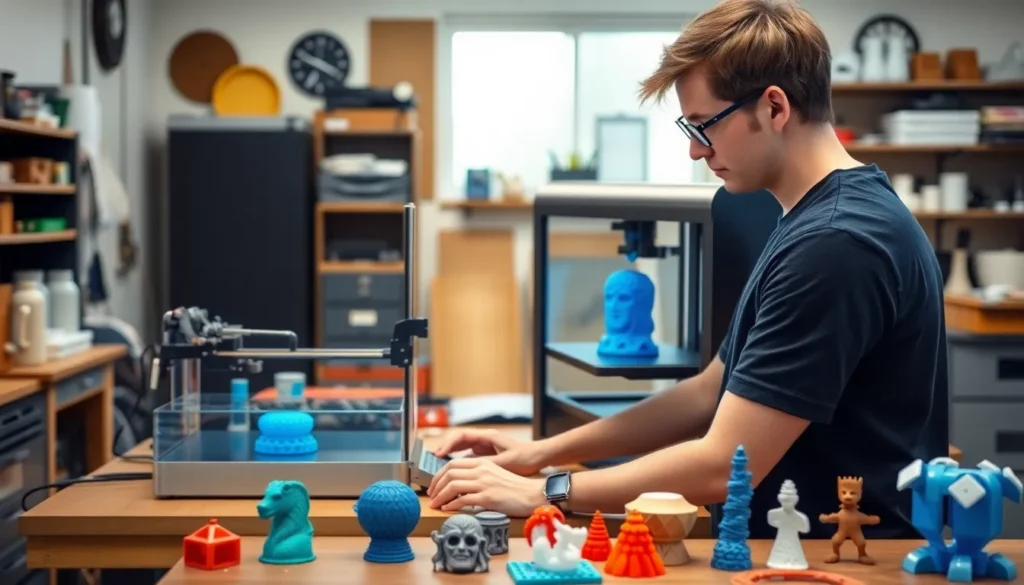
In a world where everything seems to be going digital, 3D printing has emerged as the superhero of manufacturing. Picture this: instead of waiting weeks for that quirky gadget or custom part, you can whip it up in your own home like a culinary masterpiece—minus the calories! From prototypes to personalized gifts, 3D printing is revolutionizing how people create and innovate.
Overview Of 3D Printing
3D printing, also known as additive manufacturing, creates three-dimensional objects from digital files. This technology uses various materials, including plastics, metals, and ceramics, to build parts layer by layer. The process starts with a computer-aided design (CAD) file, which serves as a blueprint for the object.
Different 3D printing technologies, such as Fused Deposition Modeling (FDM), Stereolithography (SLA), and Selective Laser Sintering (SLS), cater to diverse applications. FDM remains popular for consumer-level printers, while SLA is noted for its high-resolution output. SLS provides durability through its use of powdered materials.
Numerous industries benefit from 3D printing, including aerospace, automotive, healthcare, and consumer goods. Aerospace companies utilize 3D printing to reduce weight in components, enhancing fuel efficiency. In healthcare, customized implants and prosthetics facilitate more effective treatments and improved patient outcomes.
Businesses also experience significant cost reductions by implementing 3D printing. Manufacturing processes gain efficiency through reduced production time, minimizing waste. Customization options allow for a rapid response to market demands, ensuring competitive advantages.
The rise of desktop 3D printers empowers individuals to explore creativity without extensive resources. Hobbyists and makers now craft unique designs, ranging from decorative items to functional tools. As the technology evolves, more affordable and user-friendly models hit the market, increasing accessibility.
Education sectors embrace 3D printing technology to engage students in design and engineering concepts. Schools incorporate it into their curriculum, fostering innovation and practical skills. As awareness grows, sectors previously reliant on traditional methods explore 3D printing solutions, enhancing productivity and creativity.
Factors To Consider For The Best 3D Printing
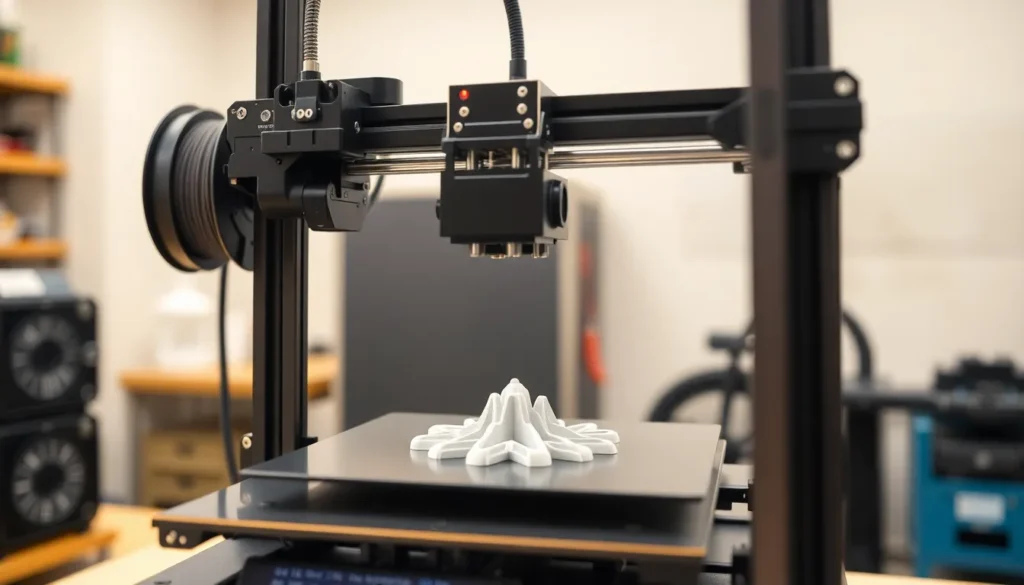
Several key factors influence the quality of 3D printing. This section explores crucial elements to evaluate for optimal results.
Printing Technology
Different printing technologies offer varied benefits. Fused Deposition Modeling (FDM) excels in ease of use and affordability, ideal for beginners. Stereolithography (SLA) provides higher precision with resin-based printing, suitable for intricate designs. Selective Laser Sintering (SLS) offers versatility, allowing for stronger materials and complex geometries. Each technology serves specific application needs, making careful selection vital for desired outcomes.
Material Compatibility
Material choice significantly affects the final product’s quality and functionality. Filaments like PLA and ABS are popular for FDM, known for their usability and strength. In contrast, SLA printers often utilize photopolymer resins, delivering fine details but requiring more care. Metal powders are essential for SLS, catering to industrial applications. It’s essential to understand compatibility between the chosen printer and materials for successful prints.
Print Resolution
Print resolution determines the level of detail and finish quality. Measured in microns, a lower micron value indicates higher resolution and finer detail. FDM printers typically range from 100 to 300 microns, while SLA printers can achieve resolutions as fine as 25 microns. Selecting the correct resolution balances detail and printing time, emphasizing specific project requirements and end-use.
Speed And Efficiency
Printing speed and efficiency play critical roles in production timelines. FDM printers generally operate faster due to layering techniques, often completing prints in hours. SLA printers, however, may require longer curing times, affecting overall speed. SLS printers often deliver high volume outputs quickly, making them suitable for batch production. Understanding speed and efficiency helps to optimize project timelines and resource management.
Top Recommendations For The Best 3D Printing
Choosing the right 3D printer can significantly impact the quality and efficiency of projects. Below are top recommendations across different categories.
Best 3D Printer For Beginners
Creality Ender 3 stands out as an excellent choice for beginners. This printer features a large build volume of 220 x 220 x 250 mm, making it suitable for a variety of projects. User-friendly assembly simplifies the setup process, allowing new users to start printing quickly. The community support for this model is robust, encouraging users to share tips and troubleshooting advice. Affordable filaments are also widely available, ensuring that costs remain low as beginners experiment with designs.
Best 3D Printer For Professionals
Prusa i3 MK3S+ serves as a top-tier option for professionals. Its exceptional precision comes from advanced features like power recovery and filament sensor technology. This printer accommodates a build volume of 250 x 210 x 210 mm, providing ample space for complex designs. Professionals appreciate its reliability, complemented by an active community offering modification ideas and enhancements. The ability to use multiple filament types further solidifies its reputation as a versatile tool for industry experts.
Best Budget 3D Printer
Anycubic Photon Mono offers an impressive value for those on a budget. This resin printer achieves high-resolution prints with a build size of 130 x 80 x 165 mm, perfect for detailed models and miniatures. Fast printing speeds delight users looking to maximize productivity while minimizing costs. Low material consumption paired with affordable resin options keeps project expenses manageable. Enthusiasts will appreciate the intuitive touchscreen interface that simplifies operation.
Applications Of 3D Printing
3D printing has widespread applications across various sectors, enhancing efficiency and creativity.
Industrial Uses
Industries leverage 3D printing for rapid prototyping, allowing for quick iterations of designs. Manufacturing lightweight components using additive techniques significantly reduces material waste. The aerospace sector benefits from strong and lightweight parts, improving fuel efficiency. Automotive companies utilize 3D printing to create custom tooling and spare parts, streamlining production processes. Furthermore, the ability to produce complex geometries supports innovation in product development. Cost savings materialize through reduced lead times and minimized inventory needs.
Educational Uses
Educational institutions increasingly integrate 3D printing into curricula to promote hands-on learning. Students engage in design projects that cultivate creativity and critical thinking skills. Schools utilize printers to create prototypes, enhancing STEM education through practical applications. Universities often encourage collaboration by allowing students from various disciplines to work on projects together. Access to 3D printing inspires future engineers and designers, equipping them with relevant skills for the evolving job market. Moreover, workshops and seminars further revolve around exploring the potential of 3D printing technology.
Hobbyist Uses
Hobbyists enjoy exploring 3D printing for various creative projects. Personalized gifts, such as custom figurines or home decor items, become popular applications for individual makers. Many enthusiasts participate in online communities, sharing designs and tips to enhance their crafts. Additionally, 3D printing enables the development of unique gadgets and tools tailored to specific tasks. People often showcase their printed creations at local maker fairs, fostering a sense of community. Furthermore, the accessibility of desktop 3D printers empowers individuals to express their artistic visions.
3D printing is reshaping how people approach design and manufacturing. Its versatility and accessibility empower users to bring their ideas to life with ease. As technology continues to evolve the possibilities seem limitless.
From home projects to industrial applications 3D printing fosters creativity and efficiency across various sectors. With the right printer and materials anyone can explore this innovative medium and unlock new potential. Embracing 3D printing could very well be the key to future advancements in personalized production and sustainable manufacturing practices.