






Table of Contents
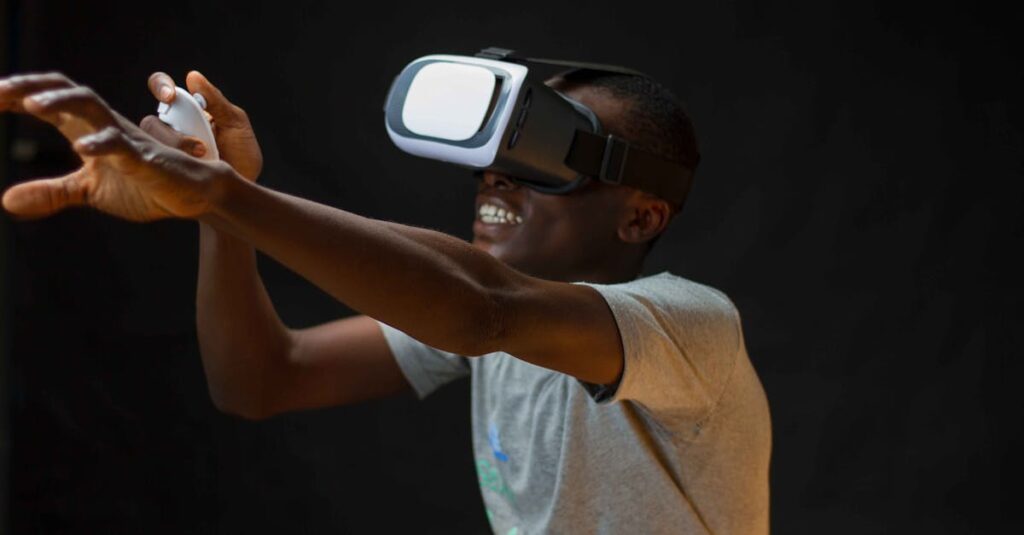
ToggleImagine diving into a world where your living room transforms into a dragon-infested castle or a futuristic battlefield. Augmented reality gaming makes this possible, and it all starts with the right hardware. With a headset snugly perched on your noggin, a controller in hand, and motion sensors tracking every move, you’re not just playing a game; you’re living it.
Overview of Augmented Reality Gaming Hardware
Augmented reality gaming relies on specialized hardware to create engaging and immersive experiences. A headset stands at the forefront of this technology, providing the visual overlay that blends digital elements with the real world. Players see a fusion of graphics and their physical surroundings through high-quality lenses and advanced displays.
Controllers enhance interactivity, allowing gamers to manipulate in-game objects seamlessly. Equipped with buttons and motion sensors, these devices facilitate intuitive actions, making the gaming experience more engaging. They translate physical movements into digital responses, creating a fluid interaction between the player and the virtual environment.
Motion sensors play a crucial role in tracking players’ movements. By capturing data from the user’s body, these sensors ensure precise alignment of virtual objects with real-world settings. They detect gestures, providing accurate feedback that enhances gameplay and overall immersion. Each movement translates into an action within the game, leading to a dynamic interaction that blurs the line between reality and fantasy.
Combining these three components—headset, controller, and motion sensors—creates a cohesive gaming experience. Enhanced through rapid technological advancements, augmented reality hardware continually evolves, offering improved performance and new possibilities. Understanding each element’s function and importance highlights how they collectively transform gaming into an extraordinary adventure.
Key Components of Augmented Reality Gaming
Augmented reality gaming relies on several key hardware components to create an immersive experience. Each part plays a specific role in enhancing gameplay and interaction.
Headset Features and Benefits
The headset serves as the central hub for visual immersion. It overlays digital graphics onto the real-world environment, enabling players to engage with both realities seamlessly. High-resolution displays offer crisp visuals, while wide field of view features enhance spatial awareness. Comfortable design ensures extended use without fatigue. Audio integration allows for spatial sound cues, making the gaming experience even more lifelike. Combining these features, the headset transforms ordinary surroundings into fantastical landscapes.
Controller Specifications and Usability
Controllers enhance interactivity by providing intuitive control schemes. Ergonomic designs fit comfortably in players’ hands, allowing for extended play sessions. Haptic feedback creates tactile sensations, adding realism to in-game interactions. Simple button layouts and motion detection facilitate smooth navigation. Many models feature adjustable sensitivity settings, catering to various gaming styles. With these specifications, controllers effectively bridge the gap between the player and the augmented world.
Motion Sensors and Interaction
Motion sensors track player movements with high precision. They ensure accurate positioning of virtual objects in relation to the real world. Advanced sensor technology enables gesture recognition, allowing players to interact naturally with the environment. Sensitivity adjustments accommodate different play spaces, ensuring flexible use in various settings. These sensors contribute to a more responsive and engaging gameplay experience. Together, the motion sensors and other components enhance the overall immersion in augmented reality gaming.
Popular Augmented Reality Gaming Hardware
Augmented reality gaming hardware plays a crucial role in delivering immersive experiences. Key components include headsets, controllers, and motion sensors that work seamlessly together.
Top Headset Models
Several headset models dominate the market. The Oculus Quest 2 offers a wireless experience with impressive visual fidelity and a comfortable fit. Microsoft’s HoloLens 2 excels in mixed reality, providing high-resolution displays and spatial audio for enhanced immersion. Sony’s PlayStation VR2 features optimized graphics and a user-friendly interface, making it popular among console gamers. Each model caters to different preferences, ensuring options exist for everyone.
Leading Controller Brands
A variety of brands lead the way in augmented reality controllers. Valve’s Index Controller stands out with its finger-tracking capabilities and ergonomic design, which enhances gameplay interaction. Microsoft’s HoloLens controller integrates seamlessly with its headsets, allowing for precise control in mixed reality environments. The Nintendo Switch Joy-Con provides versatility, accommodating both traditional and motion-based gaming experiences. Players benefit from the diverse range of options available.
Advanced Motion Sensor Technology
Motion sensors are vital for tracking user movements accurately. Leap Motion employs infrared sensors for finger and hand tracking, allowing natural interactions within virtual environments. Microsoft’s Kinect analyzes body movements, enabling gesture recognition without the need for handheld devices. The PlayStation Camera detects player motions and enables voice commands, enhancing the gaming experience. These technologies continue to evolve, pushing the boundaries of interactive gameplay.
Future Trends in Augmented Reality Gaming Hardware
Emerging advancements in augmented reality gaming hardware are set to redefine the gaming landscape. Miniature sensors and lightweight materials will enhance headset designs, increasing comfort and mobility for users. New display technologies promise increased resolution and wider fields of view, delivering even more immersive experiences.
Integration of artificial intelligence will improve motion sensors, enabling them to recognize more complex gestures and movements. Advanced haptic feedback systems are likely to provide more nuanced tactile responses, making interactions feel more realistic. Upgrades in wireless technology will reduce latency, ensuring seamless connections between headsets, controllers, and motion sensors.
Developers are also focusing on sustainability. Materials derived from recycled products may become common in hardware manufacturing, promoting eco-friendly gaming solutions. Collaborative features will gain traction, allowing multiple users to interact within the same augmented environment, enhancing social gaming experiences.
Further, the rise of cloud gaming may influence hardware specifications. As cloud processing capabilities improve, lighter headsets could handle more demanding applications without sacrificing performance. Innovative ergonomic designs will shape the future of controllers, making them more intuitive and responsive to players’ natural movements.
The evolution of augmented reality gaming hardware will center on increased interactivity, realism, and social engagement. Key players in the industry will continue to invest in research and development to deliver cutting-edge products that redefine how gamers experience their virtual and augmented worlds.
The future of augmented reality gaming is bright and filled with potential. As technology advances the integration of headsets controllers and motion sensors will continue to redefine how players interact with their environments. Enhanced comfort and mobility in hardware designs will make immersive experiences more accessible.
Emerging trends like artificial intelligence and cloud gaming will further elevate gameplay dynamics fostering deeper social connections among gamers. With a focus on sustainability and innovation the augmented reality gaming landscape is set to evolve dramatically. This evolution promises to create extraordinary adventures that blur the lines between reality and the digital world.